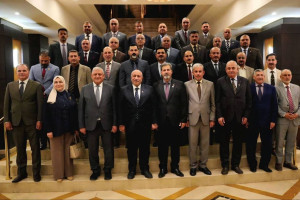
The College of Agriculture at the University of Basra organized a seminar on "Production of γ-PGA Polymer from Plant Waste and its Applications in the Baking and Dairy Industries."
The seminar aimed to isolate bacterial isolates from the environment and crops of Basra Governorate. The most efficient local isolate was selected, molecularly characterized, and registered internationally as Bacillus cereus ARM24 after confirming its complete safety and non-toxicity to human cells. The study then focused on sustainability by utilizing grape waste and soybean meal as alternative nutrient media for producing γ-PGA under optimal fermentation conditions, resulting in a significant increase in productivity. By subjecting the polymer produced from the local isolate to advanced analytical techniques, its high purity, thermal stability, and suitable molecular weight for the food industry were confirmed, leading to its successful application in food systems. The study revealed the polymer's superior ability to improve the rheological properties of dough and strengthen its gluten network, thus enhancing bread quality and delaying settling. Furthermore, it played a role in strengthening yogurt and preventing its liquids from leaking out, making it a valuable natural additive with high industrial and nutritional value.
Media and Government Communication Division / College of Agriculture
Important News
viewed most