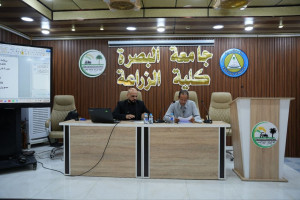
A doctoral dissertation at the College of Agriculture, University of Basra, investigated the "response of wheat crops to the growth regulators Pacloptrazole and Gibberellin and nitrogen fertilization."
The dissertation, presented by researcher Muhannad Musa Shawkan Al-Zubaidi, aimed to achieve an optimal balance between increasing productivity (grain yield) and improving crop quality (protein) while protecting the plant from breakage, through a complex management of three key factors.
The study demonstrated that a concentration of Pacloptrazole (100 mg/L) was superior in increasing grain yield and reducing lodging index. Gibberellin (200 mg/L) also enhanced growth characteristics, protein content, and stem anatomical features.
The study concluded that nitrogen fertilization (240 kg ha⁻¹) achieved the highest grain yield, while the level (120 kg ha⁻¹) yielded the best protein content. The triple interaction proved effective, with the combination (100 mg pacloptrazole + 200 mg gibberellin + 240 kg nitrogen) achieving the highest grain yield in both seasons.
Media and Government Communication Division / College of Agriculture
Important News


viewed most